Translation of Spell 87 of Book of The Dead
Before the journey, i prepared a chant for Amaymon from Spell 87 of Book of the Dead. Don’t forget that Amaymon is also a serpent. So I prepared a chant using hieroglyphics that I addressed to the darkness serpent through the translation of Spell 87. I would like to emphasize here that Amaymon is an Egyptian devil. Therefore, I always work with him using ancient Egyptian traditions.
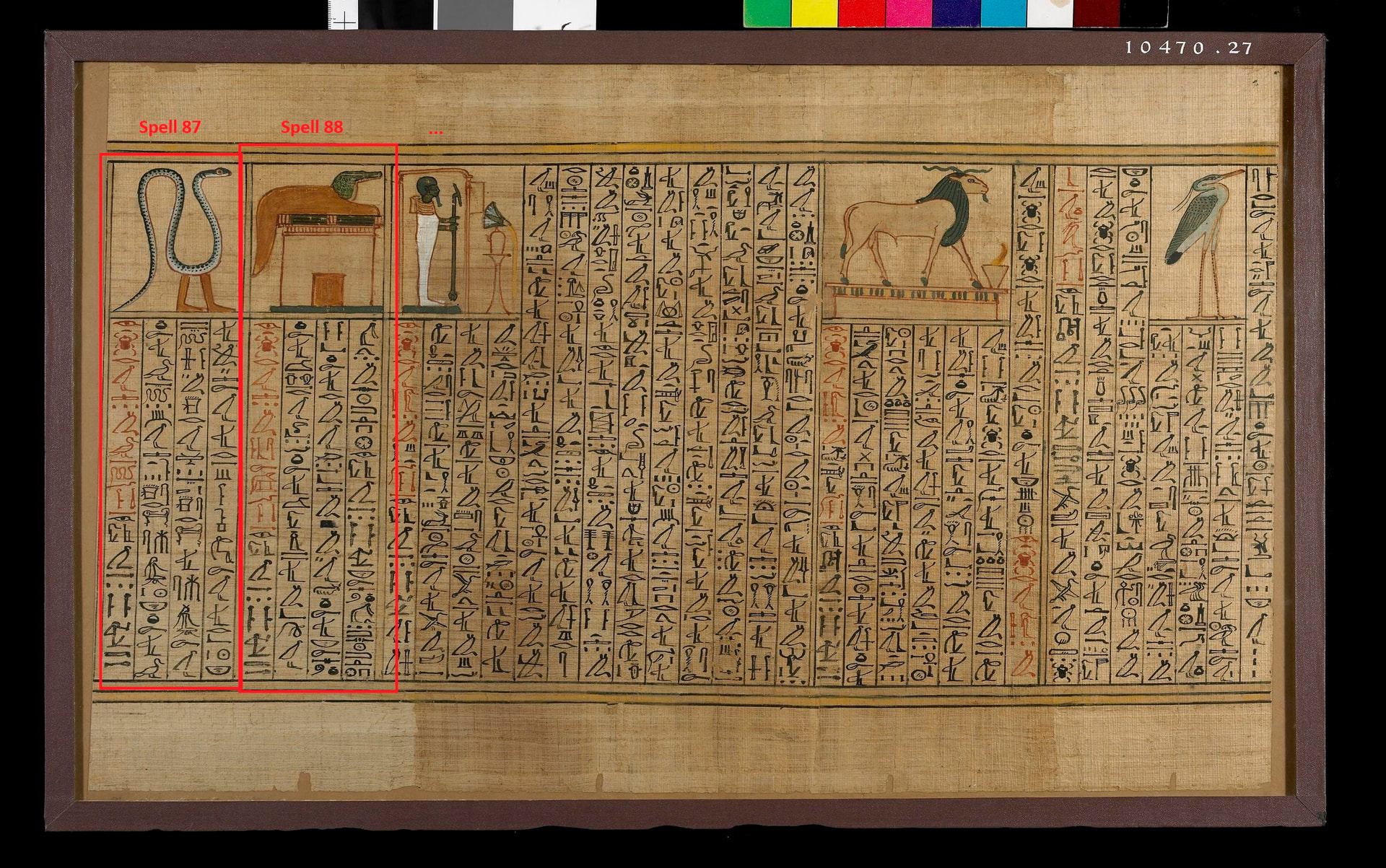
This chapter contains spell that turns a deceased into a snake. Here’s the spell from the papyrus of Ani (EA10470,27 from British Musem):
Normally, hieroglyphs are read starting from the direction in which the head of any person or animal is facing (for example, if the head is facing to the right, you start from the right). In the papyrus I shared, the animals are facing to the right, and based on this information, I should start from the far right of this papyrus.
However, despite this information, papyri related to funerals in ancient Egypt are always read from left to right. This is probably related to the sun god Ra’s journey through Duat (underworld). Remember that in the underworld, the sun travels from west to east. The Spell 87 section I shared is on the far left side of the papyrus, and to read this papyrus, you must start here first.
The spells in the Book of the Dead are written on papyrus scrolls. Each scroll may contain multiple different spells. For example, on this scroll, Spell 88 follows Spell 87:
On this papyrus, the spells are separated into squares, making them easy to distinguish. However, this design will not appear on every papyrus.
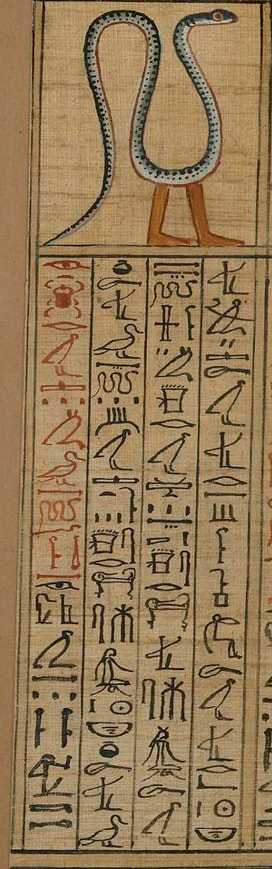
To find the beginning of a spell, you need to look for shapes written in red. If you look at Spell 87 again, you will see that the beginning is written in red (remember to read from left to right).
Here’s the transliteration for Spell 87:
irt hprw m sA tA mdw n wsir Any
ink sA tA iw sDr msi rA nb
ink sA tA imy sDw tA sDr.i msi.kwi smAwy.kwi rnpi.kwi rA nb
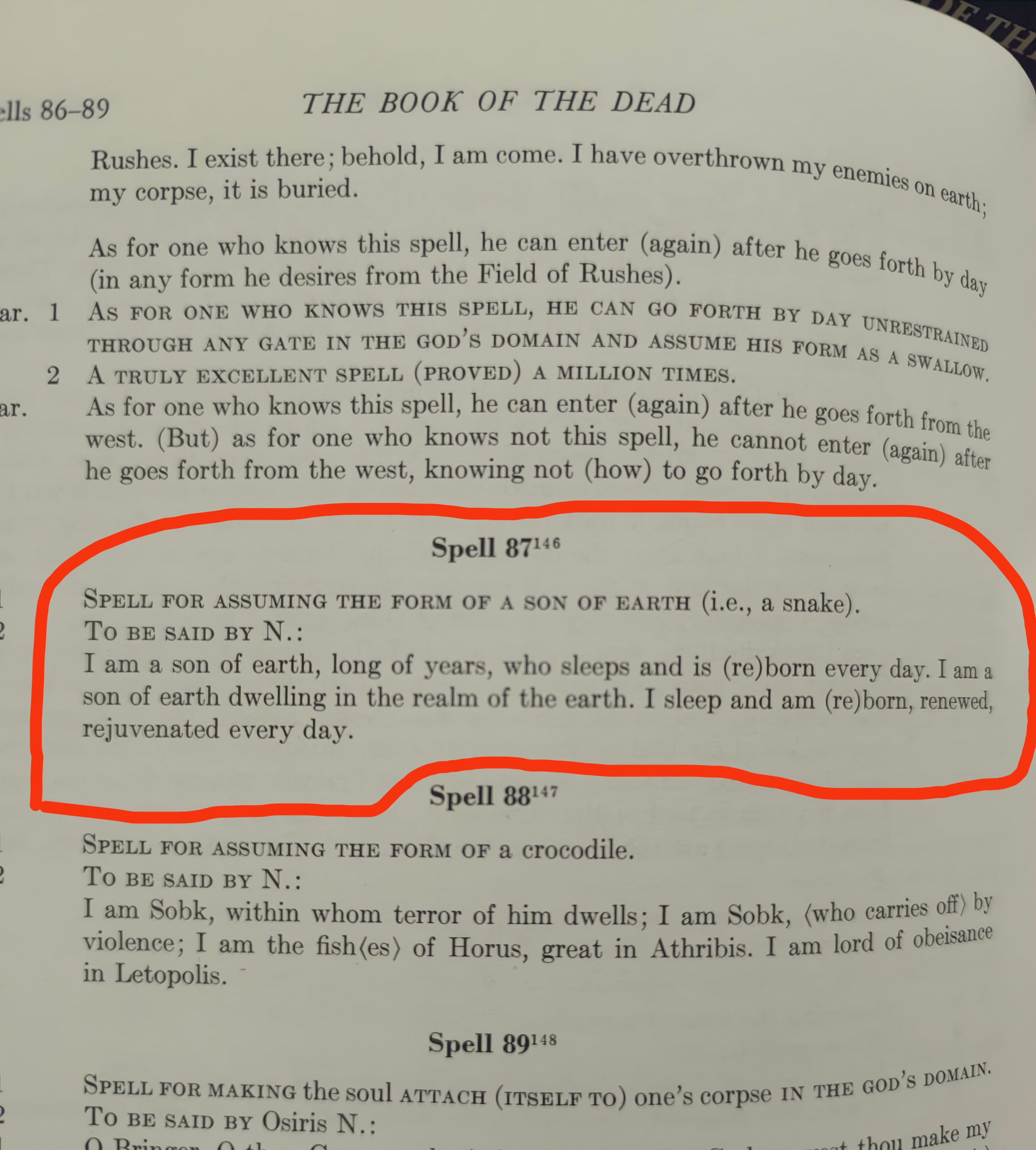
There are two classic translations for Spell 87. I will show both of these classic translations, from Allen’s The Book of the Dead (1974) and Faulkner’s translation. From Allen:
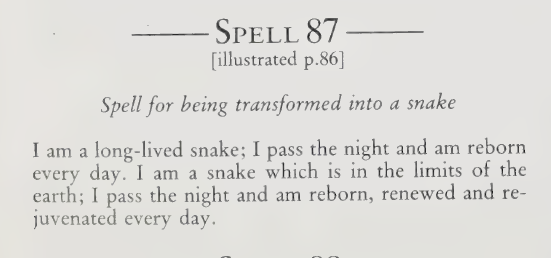
And from Faulkner (1985):
You have surely noticed the critical differences between the two translations. The first is that the beginning of the sentence is translated as ‘son of earth’.
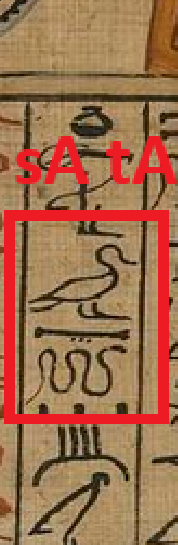
After the expression ‘ink’, ‘sA tA’ appears. Grammatically speaking, sA means son, while ‘tA’ means earth/land, and is considered grammatically correct:
The bird symbol you see inside the square (G39) means ‘son’ in ancient Egypt. You may recall the title ‘son of Ra’ that pharaohs often used. This symbol is exactly that. Immediately after that comes the N16 Gardiner sign, which means land or earth. And this phrase ends with a snake symbol.
Each hieroglyph has a “determinative” that allows you to understand where a word ends and what kind of word it is. For example, if you see a knife symbol at the end of a word, you can understand that it means “to cut something” or that it identifies the person performing “this act of cutting.” In our case, we can see that a snake symbol has been used for the phrase “son of the earth”. The spell we read is about ‘transforming into a snake’ and considering this, Faulkner’s translation makes perfect sense, and he has translated this part as ‘long-lived snake’. That’s all